
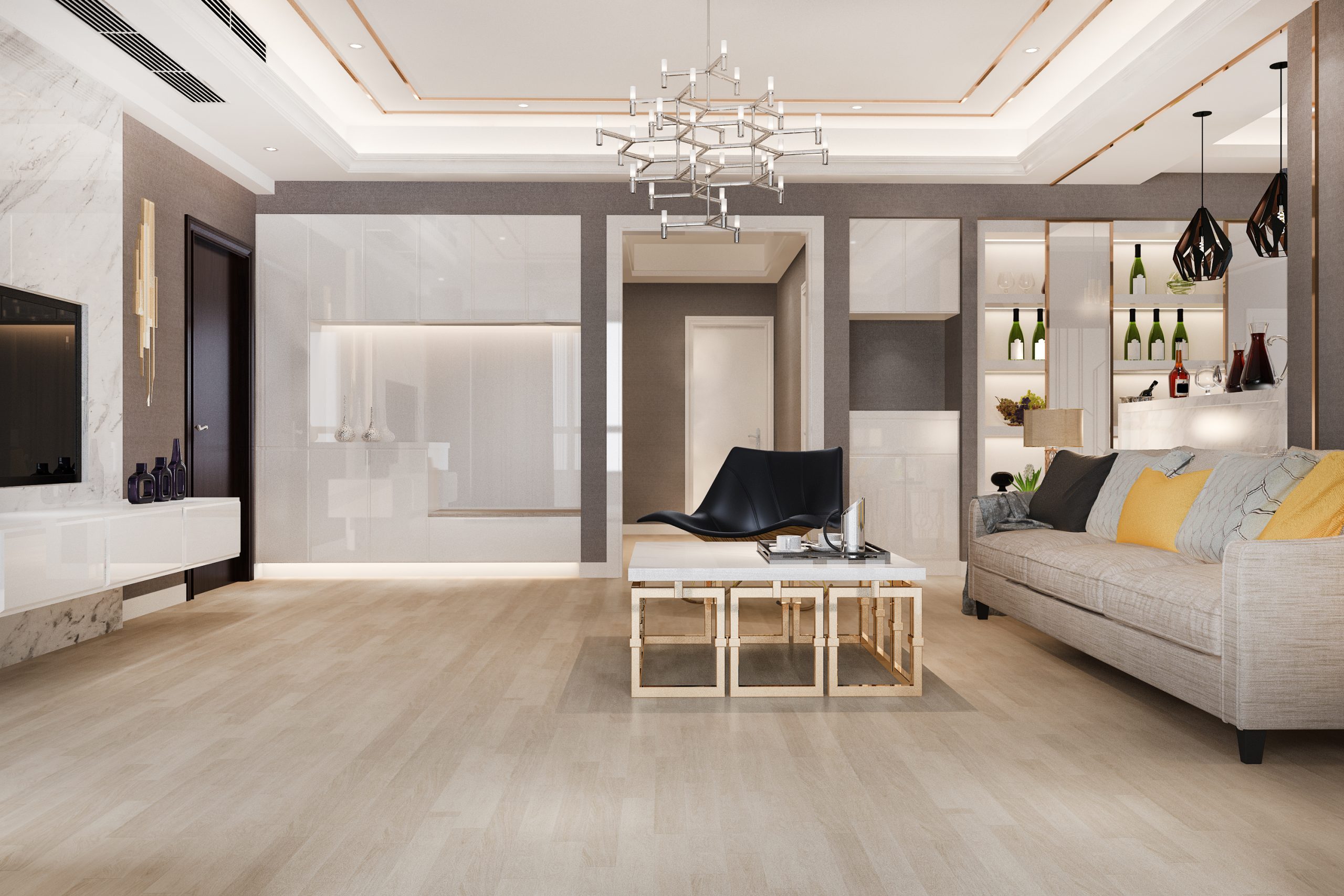
“Vinyl flooring” gets used as a catch-all term, but it actually covers several distinct products with meaningfully different installation methods, price points, and best-use cases. Understanding the differences before you shop saves you from buying the wrong product for the room you’re flooring.
Sheet Vinyl: The Original Form
Sheet vinyl comes in large rolls, typically 6 or 12 feet wide, installed as one continuous piece across a room. Its biggest advantage is genuinely seamless waterproofing — with few or no seams, water has almost nowhere to get underneath, which makes it a longtime favorite for bathrooms and laundry rooms.
The tradeoff is installation difficulty. Sheet vinyl requires precise cutting and fitting for the room’s exact dimensions, and mistakes are costly since you can’t simply replace one damaged section without redoing a larger area. It’s also less commonly chosen for aesthetics today, since plank and tile formats generally deliver a more convincing high-end look.
Vinyl Tile: Tile Looks Without Tile Hassle
Vinyl tile, including the premium LVT (luxury vinyl tile) category, comes in individual square or rectangular pieces designed to mimic the look of ceramic, stone, or marble. It’s all about giving you that high-end natural stone feel without the high cost, and individual tiles can be replaced if damaged, which is a real practical advantage over sheet vinyl.
Vinyl tile suits kitchens, entryways, and bathrooms particularly well, anywhere a stone or ceramic look is desired without the cost, weight, and installation complexity of the real material.
Vinyl Plank (LVP): The Hardwood Alternative
Vinyl plank, covered in more depth elsewhere, mimics hardwood in long rectangular planks and has become the dominant vinyl flooring category in recent years, largely because it pairs a convincing wood aesthetic with full waterproofing.
Cost Comparison Across Types
Vinyl flooring overall costs $2 to $16 per square foot installed, depending on the specific type chosen, with sheet vinyl generally landing at the lower end and premium rigid-core plank and tile products at the higher end. LVT and LVP installation costs are quite similar to each other, both running roughly $2 to $10 per square foot, so the choice between them usually comes down to desired aesthetic rather than budget.
Installation Method Matters
Vinyl flooring comes in three installation formats: click-lock (planks or tiles snap together, floating over the subfloor), glue-down (adhered directly to the subfloor for maximum stability), and peel-and-stick (the most DIY-friendly but generally the least durable option). Click-lock systems are the easiest for confident DIYers, while glue-down is more commonly left to professionals, particularly in larger rooms or over radiant heat systems.
Choosing the Right Vinyl for Each Room
For bathrooms and laundry rooms, prioritize fully sealed seams — sheet vinyl or tightly click-locked rigid-core tile both work well. For kitchens, LVP or LVT with a thicker wear layer handles dropped pans and high foot traffic admirably. For basements, rigid SPC-core products resist the moisture and temperature swings common to below-grade spaces better than standard flexible vinyl.
There’s no single “best” vinyl flooring — only the right type for the specific demands of the room you’re flooring.