
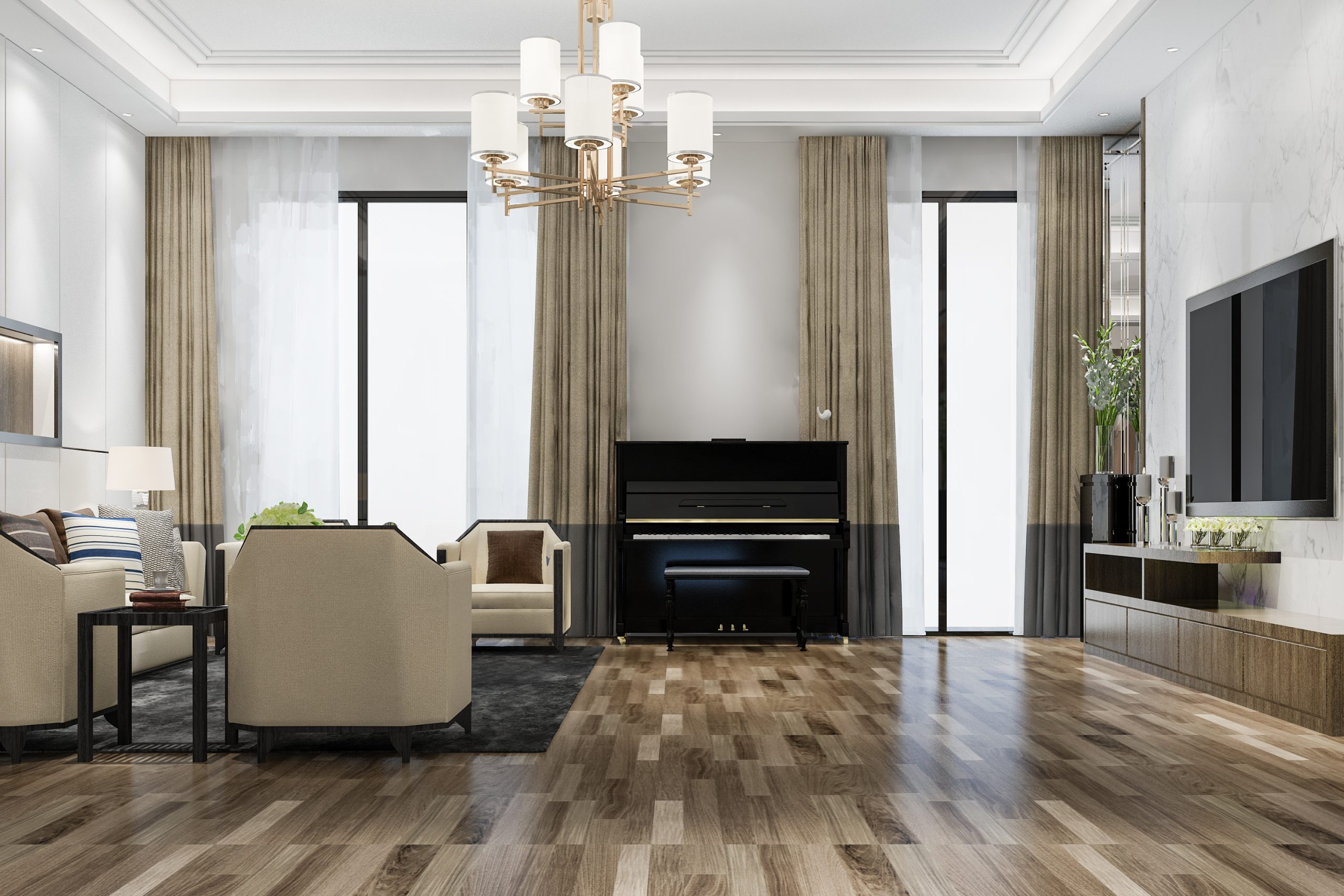
If you’ve shopped for flooring in the last few years, you’ve almost certainly encountered LVP — luxury vinyl plank — promoted as the answer to nearly every flooring problem. Waterproof, durable, looks like wood, costs less than wood. It sounds almost too good. So what’s the actual catch, if there is one?
What LVP Actually Is
LVP stands for luxury vinyl plank — flooring that comes in plank shapes designed to mimic the look of hardwood floors, built from a multi-layer vinyl construction that typically includes a rigid core, a printed design layer, and a protective wear layer on top. Rigid-core LVP, built with either an SPC (stone-plastic composite) or WPC (wood-plastic composite) core, is genuinely waterproof — the planks won’t swell, warp, or delaminate from water exposure, which is the headline reason it’s taken over kitchens, bathrooms, and basements that previously required tile or sealed concrete.
The Genuine Advantages
Waterproofing is the big one, and it’s not marketing exaggeration. Spills, pet accidents, and even minor flooding generally don’t damage quality rigid-core LVP, which makes it a genuinely sound choice for moisture-prone rooms where hardwood was never a realistic option.
A standard 20-mil wear layer resists scratches, scuffs, and stains for 15 to 25 years of typical residential use, holding up well against furniture, rolling chairs, and dog nails — better, in fact, than most laminate or softwood flooring. LVP with attached underlayment also produces noticeably less impact noise than hardwood or laminate, which matters considerably in apartments, multi-story homes, or rooms above a finished basement.
Installation is also genuinely more DIY-friendly than most flooring types, particularly with click-lock plank systems that snap together without glue or nails.
The Honest Drawbacks
LVP doesn’t offer the same refinishing flexibility as hardwood — when it’s damaged or worn out, you replace it rather than sand and restain it. It also feels noticeably colder and harder underfoot than carpet, and even compared to laminate, which has a slightly more substantial feel due to its thicker fiberboard core.
While quality LVP looks remarkably realistic from a distance, very close inspection can still reveal the repeating pattern in budget products — paying more for randomized plank designs genuinely matters if a convincing wood look is the priority.
What It Actually Costs
Quality LVP runs $2 to $5 per square foot for materials, with total installed costs landing between $4 and $10 per square foot — meaningfully less than hardwood at $8 to $18 installed or porcelain tile at $8 to $20 installed. Premium rigid-core products with thicker wear layers and wider plank formats push toward the higher end of that range.
Where It Makes the Most Sense
LVP is a genuinely smart choice for kitchens, bathrooms, basements, mudrooms, and high-traffic family areas where moisture and durability matter more than the absolute authenticity of a hardwood look. For a primary bedroom or formal living room where you want the warmest, most premium underfoot feel and don’t face moisture concerns, real hardwood or a higher-end engineered wood may still be worth the additional investment