
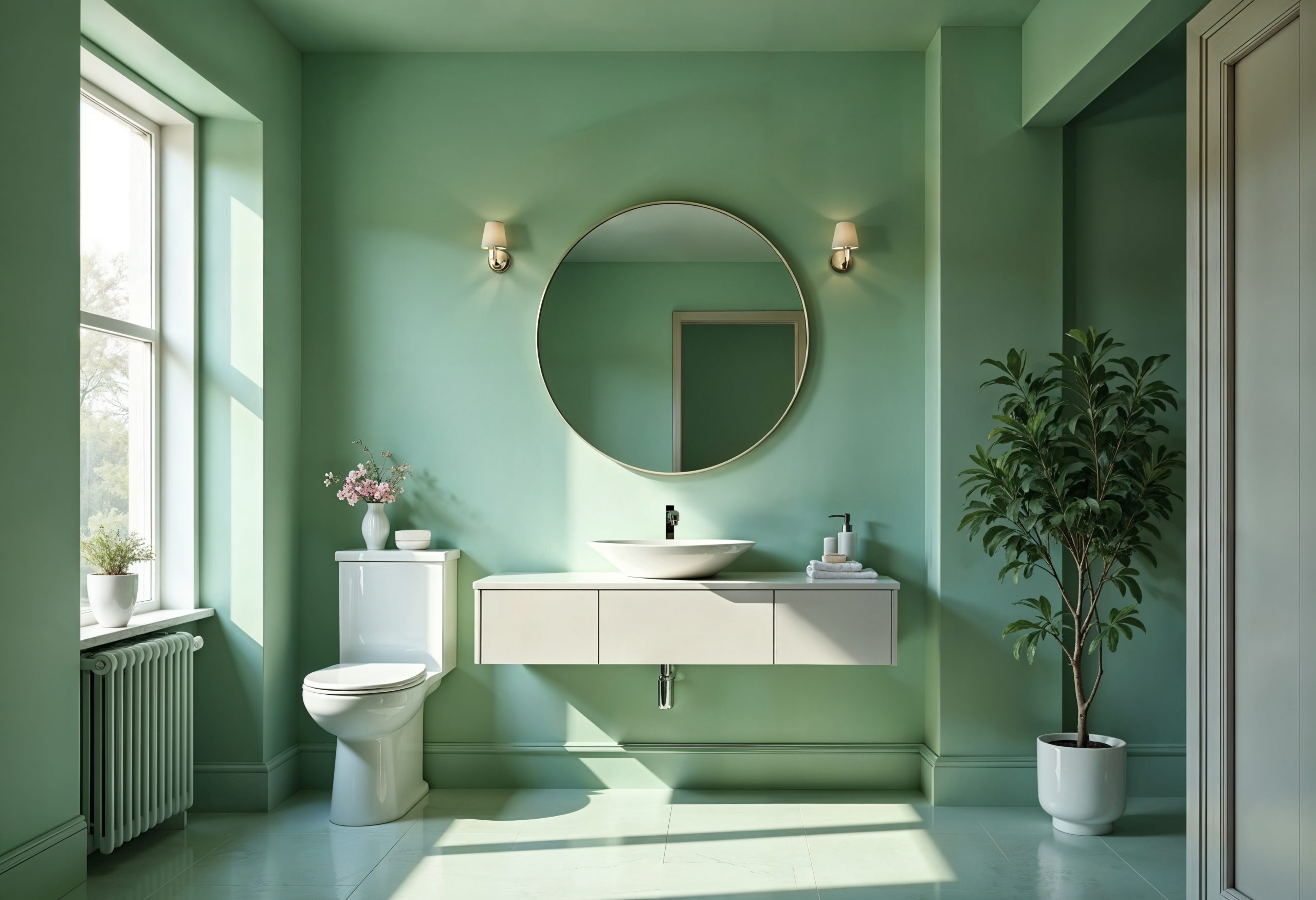
The bathroom vanity is one of those purchases that looks simple until you actually start shopping. Suddenly you’re confronting decisions about vessel sinks versus undermount, single versus double basin, floating versus freestanding, and a dozen cabinet finishes you didn’t know existed. Here’s how to actually narrow it down.
Start With the Measurement, Not the Style
Before falling in love with any particular vanity, measure your available space precisely — width, depth, and the height clearance to any windows, light fixtures, or mirrors. Standard vanity widths run from 24 inches (suitable for a small powder room) up to 72-plus inches for double-basin primary bathrooms, in roughly 6-inch increments.
Depth matters more than people expect. Standard depth is 21 inches, but compact 17-to-18-inch options exist for narrow bathrooms where every inch of walking space counts. Don’t guess — measure the actual clearance you need to comfortably open drawers and walk past the vanity without bumping into it.
Floating vs. Freestanding
Floating (wall-mounted) vanities create visual openness and make a small bathroom feel larger because you can see floor beneath them — they also make cleaning the floor considerably easier. They do require solid wall blocking for proper installation and support, which matters if you’re retrofitting an older bathroom.
Freestanding vanities sit directly on the floor, offer more storage volume since they extend to the ground, and tend to read as more traditional or furniture-like. They’re also generally easier and cheaper to install since they don’t require special wall reinforcement.
Storage: Think About How You Actually Use the Space
Drawers offer significantly better organization than cabinet doors with shelves — items don’t get buried in the back, and you can use drawer organizers for smaller items like makeup and grooming tools. If you share a bathroom, a double-basin vanity with separate storage zones genuinely reduces morning friction, even if it costs more upfront.
Material and Countertop Considerations
Quartz countertops have become the default recommendation for bathroom vanities because they’re non-porous, resist staining from cosmetics and toiletries, and require no sealing. Granite offers similar durability with more natural variation. Cultured marble is a budget-friendly option but is more prone to scratching over time.
For the cabinet itself, solid wood construction holds up better in a humid bathroom environment than MDF or particleboard, which can swell or delaminate with prolonged moisture exposure. If budget requires MDF, look specifically for moisture-resistant rated products.
Sink Style Affects Daily Use More Than You’d Think
Undermount sinks are easier to keep clean since there’s no rim to trap grime, and they maximize usable counter space. Vessel sinks (sitting on top of the counter) create a striking visual statement but require a slightly taller faucet and can be harder to keep the surrounding counter dry. For a primary bathroom used daily by multiple people, undermount is generally the more practical choice.
The Final Check
Before buying, confirm the vanity’s plumbing rough-in dimensions match your existing plumbing locations, or budget for the cost of moving pipes to fit. This single detail is the most common source of installation-day surprises — verify it before the vanity arrives, not after.