
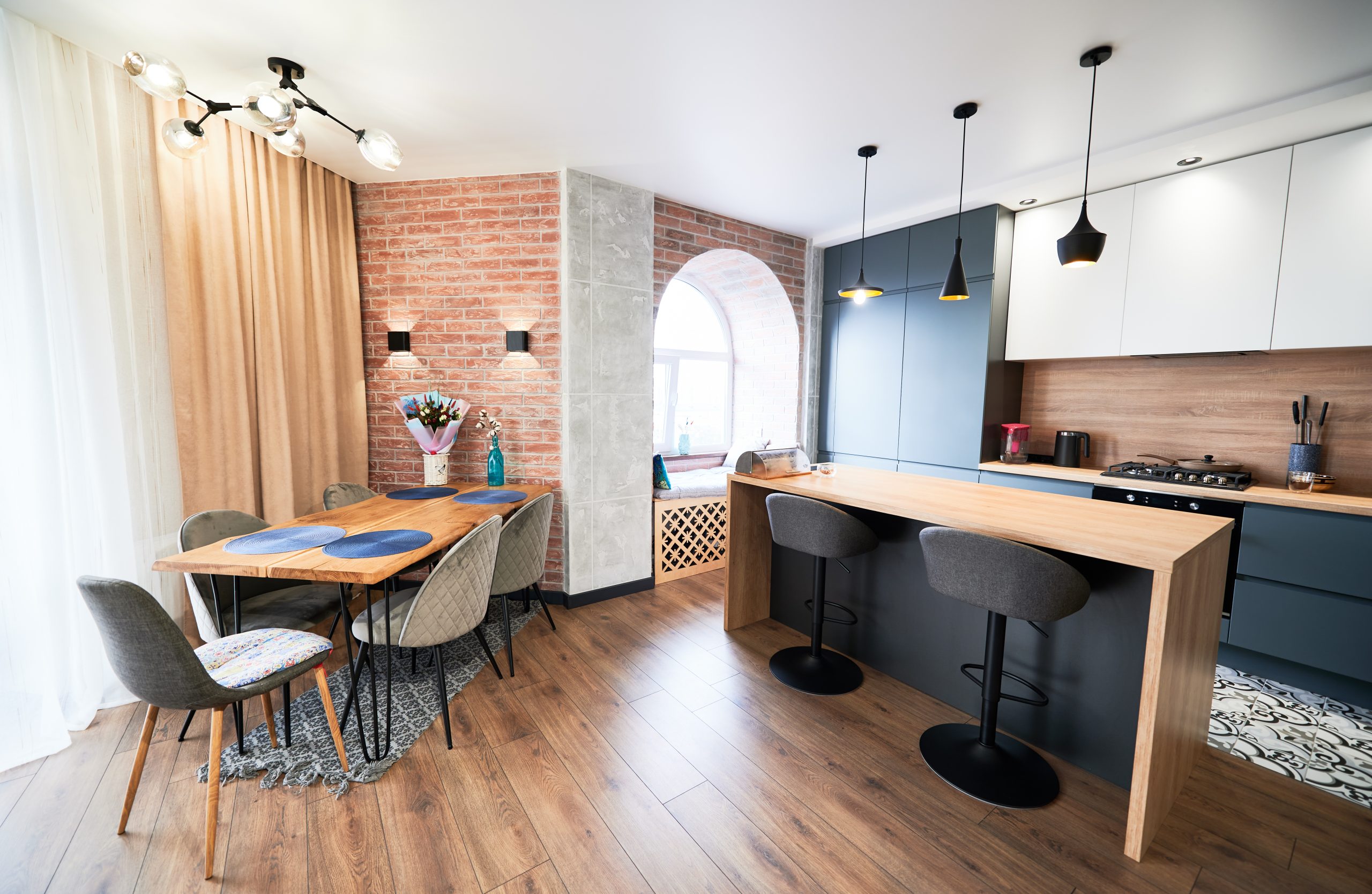
Studio living has a specific challenge that larger apartments don’t: every function of your life — sleeping, working, eating, relaxing — happens in essentially one room. Without intentional design, that translates to visual chaos. With it, a studio can feel surprisingly spacious and genuinely well-organized.
Zoning Without Walls
The first principle of studio design is creating distinct zones without physically dividing the space. A rug under your “living room” furniture signals where that zone begins and ends, even in an open room. A bookshelf placed perpendicular to a wall (rather than against it) can subtly separate a sleeping area from a living area without blocking light or making the room feel chopped up.
Open shelving units, used as room dividers, accomplish double duty: they create separation while still allowing light to flow through, and they give you storage you desperately need in a small footprint.
Furniture That Pulls Double Duty
In a studio, every piece of furniture should justify its footprint by doing more than one job. A storage ottoman serves as a coffee table, extra seating, and hidden storage simultaneously. A daybed against a wall functions as a sofa during the day and a bed at night, eliminating the need for two separate large furniture pieces. A drop-leaf or extendable dining table can shrink to a console against the wall when not in use, then expand for actual meals or work sessions.
Murphy beds have also become significantly more affordable and better designed in recent years, and for genuinely tiny studios, they remain one of the most effective ways to reclaim floor space during waking hours.
Vertical Storage Is Your Best Friend
When floor space is limited, the walls and ceiling become valuable real estate. Tall, narrow bookshelves store significantly more than wide, short ones while taking up less floor footprint. Hooks and wall-mounted organizers near the entry keep coats, bags, and keys off counters and floors. Over-the-door organizers in closets multiply your storage without taking any additional space at all.
Mirrors and Light: The Studio’s Secret Weapon
A large mirror, placed opposite a window, doubles the perceived light and visually expands the room. This is one of the simplest, cheapest interventions with an outsized visual effect. Avoid heavy, dark furniture and curtains that block light — in a studio more than anywhere else, light is square footage you can’t afford to lose.
Color Strategy for Small Spaces
Contrary to popular advice, an all-white studio isn’t mandatory — and it can feel sterile if overdone. A cohesive color palette of two to three colors, applied consistently across textiles and accents, makes a small space feel curated rather than cramped. Save the boldest color for one accent wall or a few key pieces rather than spreading visual weight evenly across everything.
The Real Secret: Edit Ruthlessly
More than any design trick, the single biggest factor in how a studio feels is how much stuff is actually in it. A studio with thoughtfully chosen furniture and minimal clutter will always read larger and calmer than a bigger apartment crammed with too much. When in doubt, remove rather than add.