
Most owners picture a flat roof as a level slab with a coating on top, and assume waterproofing is simply a matter of picking a good coating. In practice the coating is the last step of a system that starts with slope, drainage and the condition of the concrete underneath. Anyone weighing up flat roof waterproofing Singapore work is better served by understanding that system first because most leaks trace back to it, not to the product on the label.
A Flat Roof Is Never Truly Flat
A properly built flat roof has a gentle fall, usually formed with a cement screed that directs water towards outlets or gutters. When the screed is uneven, or when later works add weight and cause slight deflection, shallow ponds form after every storm. Standing water is the single biggest stress on any membrane. It holds heat and keeps small defects wet long enough to become entry points. Checking where water sits an hour after rain tells you more than any brochure.
Where Water Actually Gets In
Leaks rarely start in the middle of an open roof. They begin at transitions: where the slab meets a parapet wall, around pipe penetrations, at drain outlets, beneath condenser brackets and along expansion joints. These points move differently from the main slab as temperatures swing between afternoon sun and evening downpours. A membrane that is perfectly sound across the open field can still fail at a poorly finished upstand. Water then travels along the slab before appearing on a ceiling.
The Main Membrane Families
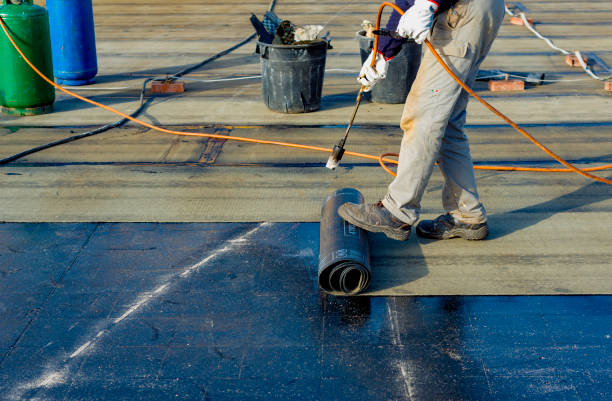
Three broad approaches dominate local projects. Torch-on bituminous membranes are rolled sheets heat-bonded to the slab, valued for their thickness and tolerance of rough handling. Liquid-applied systems, commonly polyurethane or acrylic, cure into a seamless skin that wraps neatly around awkward details. Cementitious coatings bond well to concrete and suit areas that will later be tiled or screeded over. Each has a place, and the right choice depends on exposure, access, the existing surface and what will sit on top of the finished layer.
Why Surface Preparation Decides the Outcome
Even the best material fails when laid over dust, moisture or loose old coatings. Preparation usually means stripping failed layers, grinding or washing the slab, repairing cracks and spalled concrete, and letting the surface dry sufficiently before priming. A contractor who explains how they will manage moisture content, rather than simply promising a start date, is showing you where the real quality control happens.
Detailing at Edges, Upstands and Outlets
Good detailing means running the membrane up parapet walls to a sensible height, terminating it under a capping or into a chase, and reinforcing corners with additional layers or fabric. Drain outlets need properly sealed collars so water passes into the pipe rather than around it. These are the tasks that take the most time and become invisible once finished. When reviewing a quotation for waterproofing a flat concrete roof, ask specifically how each of these points will be treated, not just which product covers the open area.
Testing Before Anyone Walks Away
A flood or ponding test is the simplest way to prove a new membrane. Outlets are temporarily blocked, the roof is filled with a few centimetres of water, and the space below is checked over a day or two. It costs some time, but it is far cheaper than discovering a defect after tiles, decking or equipment have been placed on top. Owners should ask whether a test is included in the price and who will be present when the water is finally released.
What Warranties Do and Do Not Cover
Warranty periods for flat roof systems commonly range from five to ten years, but the length matters less than the wording. Many warranties cover workmanship only, exclude damage caused by other trades, or become void if new penetrations are made without the original installer. Read the exclusions closely and keep the paperwork with the property records. A long warranty from an unresponsive firm is worth little.
Roofs That Carry Equipment or Foot Traffic
Roof terraces, plant platforms and roofs used for regular maintenance access need a tougher specification. Foot traffic abrades soft coatings, and equipment bases puncture membranes if they are bolted through without proper sealing. Protective screeds, walkway pads or tiles laid over the waterproofing spread the load and shield the membrane from sunlight. Plan these layers at the start; retrofitting protection over a finished roof often means cutting into the very membrane it is meant to protect.
Maintenance Between Recoats
Most failures are accelerated by neglect even when they are not caused by it. Leaves and debris clog outlets, standing water follows, and small blisters go unnoticed until a ceiling stains. A short inspection twice a year, ideally before the wetter monsoon months, keeps drains clear and catches cracked sealant around penetrations. Liquid systems may need a top coat refreshed every few years as ultraviolet exposure wears the surface. Recording what was found makes future repairs faster and warranty claims simpler.
Deciding What Your Roof Needs
Start with symptoms and age. A roof with isolated stains and a sound membrane may need targeted repairs at upstands and outlets rather than a full overhaul. A roof with widespread blistering, cracking or repeated ponding usually calls for stripping back and rebuilding the system, including the screed falls. Gather two or three quotations that describe preparation, detailing and testing in writing, and compare them line by line. Then choose the specialist flat roof waterproofing service whose method you understand, not simply the lowest figure.