
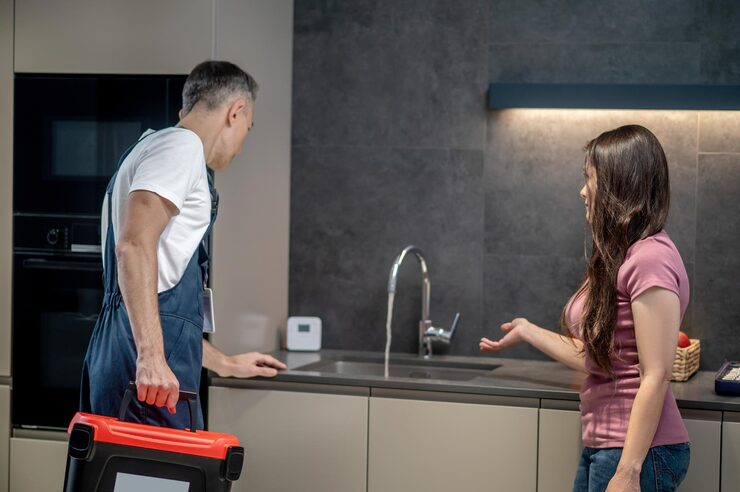
At 11 PM on a Saturday, with water pooling somewhere it shouldn’t be, the question “is this actually an emergency, or can it wait until Monday” becomes surprisingly hard to answer under pressure. Knowing the difference in advance — before you’re standing in a flooding bathroom — makes a genuinely stressful moment considerably more manageable.
Genuine Emergencies: Act Immediately
A burst pipe is the clearest case — water actively flowing where it shouldn’t, with the potential for significant property damage by the hour, demands an immediate emergency plumber call, no question. The first move before anyone even arrives is locating and shutting off your home’s main water supply valve, which limits ongoing damage while you wait for help.
Sewage backup is another unambiguous emergency, both for the property damage risk and the genuine health hazard involved. Avoid all contact with affected areas and call for emergency service immediately rather than attempting any DIY intervention.
A gas smell anywhere near plumbing or water heater equipment is an emergency that takes priority over everything else — leave the property immediately, call your gas utility’s emergency line from outside, and only call a plumber once the gas company has confirmed it’s safe to return.
No hot water in freezing temperatures, particularly for vulnerable household members, or any flooding actively affecting electrical systems also warrant true emergency response rather than waiting for regular business hours.
Urgent, But Possibly Not Middle-of-the-Night
A single clogged toilet (assuming you have at least one other working bathroom), a slow drain, or a dripping faucet are genuinely annoying but rarely require after-hours emergency rates. These can usually wait for a scheduled appointment during regular business hours without meaningful additional damage occurring in the meantime.
A water heater that’s stopped producing hot water, while inconvenient, is typically not a true emergency unless it’s actively leaking water as well — it can usually wait a day for a scheduled repair rather than commanding premium emergency rates.
What to Do While Waiting for Help
For any active water leak, shutting off the main water valve is the single most important action you can take, since it stops ongoing damage regardless of how quickly help arrives. Most homes have this valve in a basement, crawl space, or exterior location near where the main line enters the house — it’s worth locating and testing this valve now, before an actual emergency, rather than searching for it under pressure during a flood.
Move any valuables and electronics away from affected areas, and if water has reached any electrical outlets or panels, avoid the area entirely and contact your utility company before a plumber, since electrical hazards from water exposure require immediate attention of their own.
Finding a Reliable Emergency Plumber Before You Need One
The best time to research “emergency plumbing near me” options is before you’re in crisis mode. Look for licensed, insured plumbers with genuine 24/7 availability (not just an answering service that calls back during business hours), and save the contact information somewhere accessible — not buried in a search you’ll have to perform while standing in rising water.
The Real Takeaway
Most plumbing problems, even uncomfortable ones, aren’t true emergencies. But the ones that are — active flooding, gas smells, sewage backup — genuinely can’t wait, and knowing the difference, along with where your main water shutoff valve is located, is worth knowing before you ever need that knowledge under pressure.