
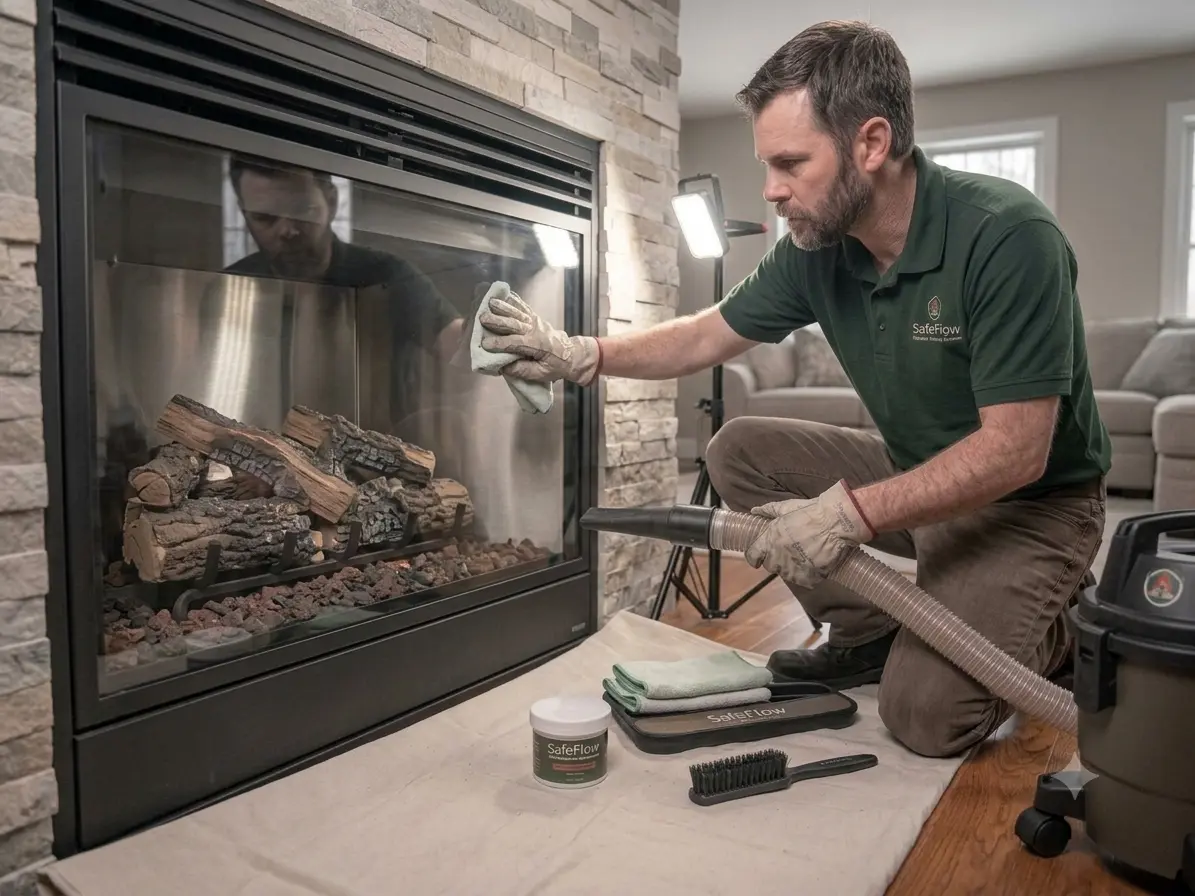
Gas fireplaces are popular with homeowners who want warmth and ambiance without the work associated with storing, carrying, and burning firewood. With the push of a button or switch, a gas fireplace can provide heat and an inviting atmosphere in a matter of moments.
Although gas fireplaces generally produce less visible residue than traditional wood-burning fireplaces, they still require regular care. Dust, dirt, soot, moisture, mineral deposits, and combustion byproducts can accumulate over time. Components can also wear down or become obstructed, affecting the appearance and performance of the appliance.
Understanding how to maintain a gas fireplace can help homeowners protect their investment, improve efficiency, and recognize potential problems before they become more serious.
Gas Fireplaces Still Need Routine Attention
One common misconception is that gas appliances are maintenance-free. Because they don’t burn logs in the same way as a wood fireplace, homeowners may assume that cleaning is unnecessary.
In reality, a gas fireplace contains several components that need to remain clean and in good working condition. Burners, vents, glass panels, pilot assemblies, decorative media, and ventilation pathways can all collect dust or experience wear.
A dirty burner can affect the appearance of the flame and may interfere with proper combustion. Dust around vents can restrict airflow, while a dirty glass panel can make the fireplace look cloudy or discolored.
Regular care helps keep these components functioning as intended.
Why the Glass Can Become Cloudy
The glass front is often one of the first areas where homeowners notice a change.
Depending on the fireplace design and fuel system, combustion can leave behind a light film or discoloration on the glass. Dust and household particles may also accumulate on surrounding surfaces.
A cloudy or darkened glass panel isn’t just a cosmetic issue. Changes in the appearance of the glass can sometimes indicate that the appliance isn’t burning as it should.
Homeowners should follow the manufacturer’s instructions when cleaning fireplace glass. Some glass panels require specific cleaning products, while ordinary household glass cleaners may damage specialized coatings or leave residues.
The appliance should always be completely cool before attempting any cleaning.
Flame Appearance Can Provide Useful Clues
The appearance of a gas fireplace flame can provide homeowners with information about how the appliance is operating.
A properly functioning appliance should produce a flame consistent with the manufacturer’s specifications. Significant changes in flame color, height, or behavior may indicate that the burner or another component needs attention.
Homeowners shouldn’t attempt to adjust gas valves, burners, or other internal components without the appropriate qualifications. Gas appliances involve combustion and fuel connections, so suspected mechanical or gas-related problems should be handled by an appropriately trained professional.
If an appliance suddenly produces unusual odors, inconsistent flames, excessive soot, or other unexpected symptoms, turning it off and arranging an evaluation is a safer approach than attempting a repair without proper knowledge.
Dust Can Affect More Than Appearance
Household dust is unavoidable, and some of it eventually finds its way into areas around a fireplace.
Dust can collect on decorative logs, stones, burners, vents, and other surfaces. Pet hair and airborne debris can contribute to the buildup.
Although removing accessible dust may seem like a simple housekeeping task, internal components can be more difficult to clean safely. A professional can identify areas that require attention without unnecessarily disturbing components that are designed to remain in a specific position.
This distinction is important because decorative elements in many gas fireplaces are positioned according to specific combustion requirements. Moving them incorrectly can affect flame behavior.
Ventilation Should Never Be Overlooked
A gas fireplace needs appropriate ventilation to operate safely.
Depending on the appliance design, it may use a direct vent, natural vent, or another approved venting configuration. The venting system provides a pathway for combustion gases to leave the home.
Obstructions, damaged vent components, or improperly installed modifications can affect how gases are exhausted.
Exterior vent openings should remain clear of leaves, snow, vegetation, nests, and other debris. Homeowners should never block or cover a vent because doing so can interfere with the appliance’s intended operation.
Any suspected venting problem deserves professional attention.
Why Professional Cleaning Can Be Valuable
Basic household care can address some visible dust and surface dirt, but professional service provides a more comprehensive approach.
Professional technicians can examine the appliance and identify areas that may not be obvious to the homeowner. Depending on the system, service may involve cleaning accessible components, checking the burner area, examining venting, inspecting the glass, and looking for signs of deterioration.
Homeowners researching professional gas fireplace cleaning can use professional service as part of a broader maintenance routine, particularly when the fireplace has not been serviced for an extended period.
Professional maintenance is also useful when a homeowner notices changes in performance but cannot determine the cause.
Warning Signs That Shouldn’t Be Ignored
A gas fireplace should operate consistently. Changes in its behavior can indicate that an inspection is appropriate.
Common warning signs include unusual odors, excessive soot, difficulty igniting, irregular flames, unusual sounds, damaged glass, or visible deterioration around the appliance or vent.
A carbon monoxide alarm should also be installed and maintained in accordance with applicable safety recommendations. Carbon monoxide cannot be detected through smell or sight, making a functioning alarm an important safety measure in homes with fuel burning appliances.
If a homeowner suspects a gas leak, the situation should be treated as an emergency. Avoid operating electrical switches or creating flames, leave the area when appropriate, and contact the relevant emergency or gas service according to local guidance.
Cleaning Does Not Replace Inspection
Cleaning and inspection serve different purposes.
Cleaning removes accumulated dirt and residue, while an inspection evaluates the condition and operation of the system. A fireplace may need cleaning without having a significant defect, or it may appear clean while still having an underlying problem.
Combining appropriate cleaning with periodic professional evaluation can provide a more complete maintenance approach.
This is especially important for older appliances, fireplaces that have been unused for long periods, or systems that have undergone modifications.
Preparing a Fireplace Before the Cold Season
Many homeowners use their gas fireplace more frequently during colder months. Preparing the appliance before that period can help avoid discovering problems when the fireplace is needed most.
Start by checking the visible exterior and ensuring the vent opening is unobstructed. Look at the glass for unusual staining or damage, and observe the fireplace for anything that appears different from its normal condition.
If the appliance hasn’t received professional attention in a long time, scheduling service before heavy seasonal use can provide greater peace of mind.
Keeping records of previous maintenance can also be useful. Documentation helps homeowners understand when the appliance was last serviced and whether previous recommendations were completed.
Small Maintenance Efforts Protect a Valuable Appliance
A gas fireplace may require less day-to-day work than a traditional wood-burning fireplace, but it should not be considered maintenance-free.
Dust, residue, ventilation problems, component wear, and combustion issues can all affect performance over time. Regular cleaning, professional evaluation, proper ventilation, and attention to warning signs can help homeowners maintain a safer and more attractive fireplace.
The goal of maintenance isn’t simply to make the glass look clean. It is to keep the entire appliance and its ventilation system in appropriate condition.
By treating gas fireplace care as part of routine home maintenance, homeowners can enjoy the warmth and atmosphere of their fireplace while reducing the likelihood of unexpected problems. A clean, properly maintained appliance is better prepared to deliver reliable comfort when the temperature drops and the fireplace becomes an important part of the home.