
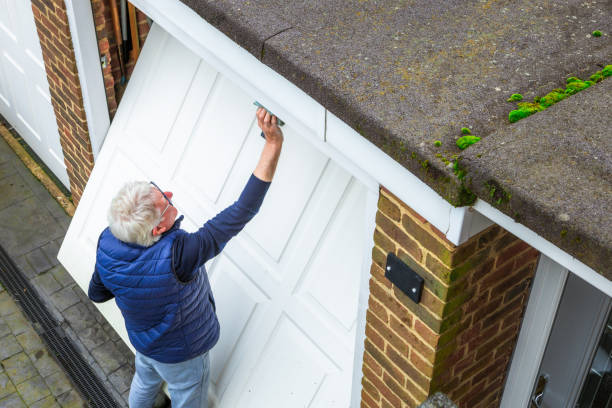
Unexpected mechanical failures can bring your daily routine to a grinding halt, leaving your home vulnerable and vehicles trapped inside. When homeowners experience sudden malfunctions, knowing how to handle emergency garage door repair safely can prevent costly property damage and severe personal injury. Garage doors and automated gates operate under immense mechanical tension, utilizing heavy springs and high-torque motors to function smoothly. Recognizing the early warning signs of component failure allows you to address minor issues before they escalate into middle-of-the-night crises.
Understanding Common Failure Triggers
Mechanical breakdowns rarely happen without warning, though many property owners overlook subtle red flags until total failure occurs. Torsion springs bear the heavy lifting load of the entire panel and undergo thousands of stress cycles over their lifespan. When a spring snaps, the loud bang often startles residents, rendering the door completely inoperable and dangerous to lift manually.
Other frequent culprits include snapped lift cables, misaligned safety photo sensors, and burned-out electronic operator motors. Weather fluctuations, rust accumulation, and lack of routine lubrication also accelerate wear on moving metal parts. Identifying these root causes helps you communicate effectively with technicians when calling for professional assistance.
Immediate Safety Protocols During a Malfunction
When a sudden breakdown occurs, your primary focus must shift immediately toward physical safety and perimeter security. Never attempt to force a jammed door open or stand beneath a suspended panel held up by a failing spring.
-
Clear the Area: Keep children, household pets, and visitors away from the garage opening until the tension is fully stabilized.
-
Disconnect Power: Unplug the automatic garage door opener or switch off the dedicated circuit breaker to prevent accidental motor activation.
-
Engage Manual Mode: Pull the emergency release cord only when the door is fully closed to avoid sudden, uncontrolled drops.
-
Secure the Perimeter: If the door is stuck partially open, lock interior connecting doors to protect your home from potential intruders.
-
Avoid DIY Spring Work: Never loosen or adjust bottom brackets or torsion cones without specialized winding bars and professional training.
Emergency Garage Door Repair Action Matrix
Evaluating the severity of a malfunction determines whether you can apply a temporary fix or need immediate professional intervention. Use this reference matrix to assess your current situation safely.
| Malfunction Type | Potential Root Cause | Immediate Action Required | Professional Intervention Level |
|---|---|---|---|
| Snapped Torsion Spring | Metal fatigue after thousands of cycles | Leave the door closed and secure the area | Urgent replacement by a qualified technician |
| Broken Lifting Cable | Fraying, rust, or sudden tension snap | Disconnect power and do not attempt to lift the door | High-priority repair to prevent panel jamming |
| Misaligned Photo Sensors | Blocked lens, dirt buildup, or loose wiring | Wipe the lenses clean and check alignment lights | Low-priority DIY fix or professional wiring adjustment |
| Stripped Opener Gear | Motor overload or worn plastic internal teeth | Stop running the motor and keep clear of the door | Moderate-priority component replacement |
Troubleshooting Minor Operational Glitches
Not every sudden malfunction requires an emergency call-out to local service technicians. Certain operational hiccups stem from simple blockages or power supply interruptions that you can resolve safely on your own.
If your door reverses immediately upon touching the ground, check the lower tracks for accumulated dirt, pebbles, or debris. Obstructions can interfere with the safety reversal system, triggering a safety retraction. Similarly, if your wall switch works but remote transmitters fail, inspect the remote battery compartments for corrosion or low voltage. Replacing dead batteries often restores wireless connectivity instantly without requiring technical support.
Selecting Professional Emergency Services
When a critical failure strikes outside standard business hours, finding a reliable contractor requires calm and deliberate decision-making. Look for licensed, bonded, and insured companies that provide transparent pricing and 24/7 dispatch availability.
Verify that the responding technicians carry the appropriate credentials for their work and offer warranty protection on replacement parts such as springs and cables. Local companies with rapid response times may be able to arrive at your property quickly to secure your perimeter and restore functionality.
Property managers can structure their emergency protocols into straightforward tables for rapid evaluation and execution during a crisis.
| Step Number | Phase | Action Details |
|---|---|---|
| Step 1 | System Failure Detected | Recognize that a mechanical or electrical breakdown has occurred. |
| Step 2 | Safety Check and Power Disconnect | Ensure the area is clear and shut off power to the opener to prevent accidents. |
| Step 3 | Urgency Assessment via Matrix | Evaluate the severity of the malfunction to determine whether professional assistance is needed. |
| Step 4 | Contact Licensed Emergency Technician | Reach out to a qualified service professional for safe repairs. |
Preventive Maintenance Strategies for Long-Term Reliability
The most effective way to avoid midnight repair emergencies is to implement a consistent preventive maintenance routine throughout the year. Dedicating time every six months to inspecting your system can help reduce the likelihood of unexpected failures and emergency service costs.
-
Inspect Hardware Fasteners: Check for loose track bolts, hinge screws, and mounting brackets that may loosen due to daily vibration. Leave repairs requiring disassembly or work on spring-loaded components to a professional.
-
Lubricate Moving Components: Apply a garage-door-compatible lubricant to rollers, springs, and hinges according to the manufacturer’s instructions. Avoid heavy grease that attracts dirt.
-
Test Balance Semiannually: A door that is out of balance may have a spring or counterbalance problem. Because disconnecting the opener and manually lifting a door can be dangerous, have a qualified professional perform balance testing if a problem is suspected.
-
Test Reversal Safety: Follow the manufacturer’s instructions for testing the automatic reversal system, including the appropriate contact test using a solid test object. Keep hands and other body parts away from the door’s path.
-
Schedule Annual Tune-Ups: Hire a qualified professional to perform comprehensive safety inspections and check spring tension, cables, tracks, and other components.
Summary of Emergency Readiness
Handling unexpected property malfunctions requires a calm demeanor, strict adherence to safety rules, and quick access to reliable professionals. By understanding common failure triggers and maintaining your equipment regularly, you can protect your family and extend the operational lifespan of your entry systems. Preparation turns stressful mechanical failures into more manageable inconveniences.