
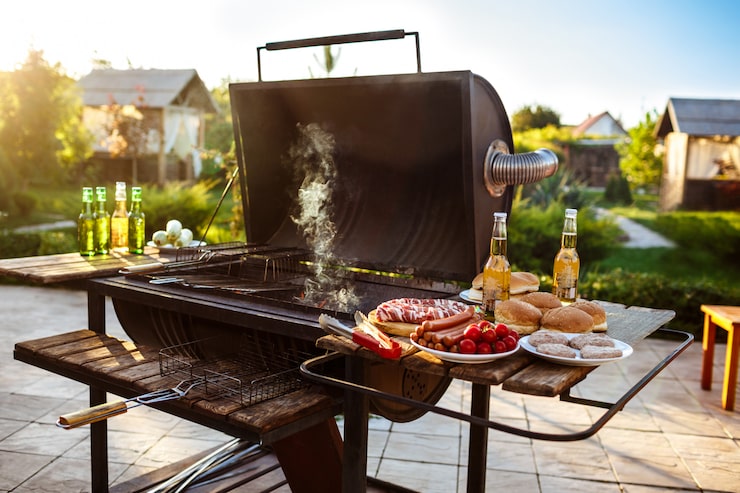
Outdoor kitchens have shifted from a luxury feature reserved for serious entertainers to a genuinely mainstream home improvement priority, as more people invest in their outdoor living space. The difference between an outdoor kitchen that gets used constantly and one that becomes an expensive backdrop comes down almost entirely to planning around how you actually cook and entertain, rather than how a magazine photo suggests you should.
Start With Your Actual Cooking Habits
Before designing anything, be honest about what you actually do outdoors. If grilling is the primary activity, a high-quality grill with adequate prep counter space matters more than a full secondary kitchen. If you entertain frequently with larger groups, dedicated bar seating and a beverage station become genuinely important. If pizza nights are a household tradition, a wood-fired or gas pizza oven might be worth prioritizing over other features entirely.
Building around your real habits, rather than a generic “complete outdoor kitchen” checklist, produces a space that actually earns its cost through regular use.
The Core Layout Principle: The Working Triangle, Outdoors
The classic kitchen design principle — keeping the cooking surface, prep area, and storage/refrigeration in reasonably close proximity — applies just as much outdoors as indoors. Outdoor kitchens that scatter the grill, prep counter, and any refrigeration across an unnecessarily large footprint end up creating more walking and less efficient cooking, even with beautiful individual components.
Weatherproofing Is Non-Negotiable
Every material choice in an outdoor kitchen needs to genuinely withstand your climate’s specific conditions — UV exposure, temperature swings, rain, and in some climates, freezing. Stainless steel cabinetry and appliances rated specifically for outdoor use resist corrosion considerably better than indoor-rated equivalents moved outside. Natural stone or concrete countertops handle temperature extremes and UV exposure better than many engineered materials not specifically rated for outdoor use.
Covered vs. Uncovered: A Real Decision, Not a Detail
Whether your outdoor kitchen sits under a pergola, full roof structure, or completely open sky significantly affects both material durability and how often the space gets used through the year. A partially or fully covered structure extends usable months considerably in climates with unpredictable weather, and protects appliances and finishes from accelerated wear, even if it represents a meaningfully larger upfront investment.
Utilities Are Where Budgets Often Go Sideways
Running gas lines, electrical, and water to an outdoor kitchen is frequently the most expensive and complex part of the project, more so than the visible cabinetry and countertops. Planning utility runs early, ideally with input from a licensed contractor before any finish materials are selected, prevents costly rework later in the process.
Don’t Skip Lighting
An outdoor kitchen used only during daylight hours misses much of its potential value. Task lighting over the cooking and prep areas, combined with ambient lighting for the surrounding seating area, extends usable hours significantly and makes evening cooking and entertaining genuinely practical rather than aspirational.
The most successful outdoor kitchens aren’t necessarily the most elaborate — they’re the ones built around how a specific household actually wants to cook, eat, and gather outside.