
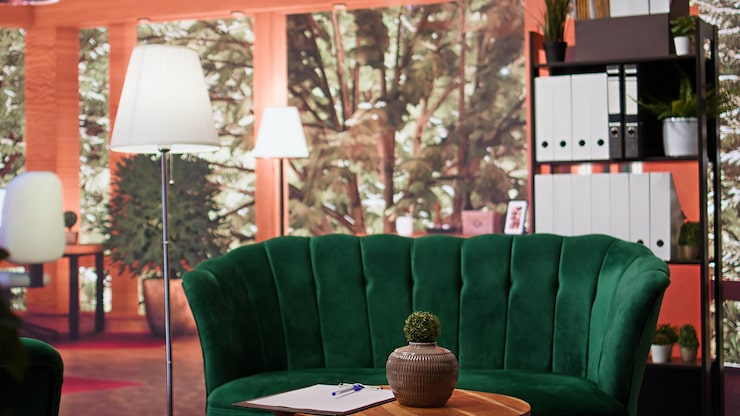
Here at MintPalDecor, we get a version of the same comment fairly often: “I love looking at beautiful rooms, but I have absolutely no eye for this myself.” That feeling is incredibly common — and also, in our experience, slightly misleading. Interior design isn’t really about an innate “eye.” It’s a specific, learnable way of thinking about space, and once you understand the logic behind it, it becomes genuinely fascinating rather than intimidating.
It’s Psychology Wearing a Decorative Disguise
Every design choice in a well-designed room is quietly doing psychological work. Warm lighting slows people down and encourages lingering conversation; cool, bright lighting energizes and signals efficiency, which is exactly why restaurants and offices light their spaces so differently. Color genuinely affects mood and perceived temperature — this isn’t decorating folklore, it’s measurable and consistently observed across design research. Once you start noticing this, you can’t really stop seeing it everywhere you go.
It’s Problem-Solving With Constraints
Good interior design is fundamentally about solving real, specific problems within real constraints: a budget, an awkward room shape, insufficient natural light, a family’s specific lifestyle needs. The most interesting design solutions aren’t the ones with unlimited resources — they’re the clever workarounds for genuine limitations, which is part of why so many of the most admired small-space and budget design solutions feel more inventive than expensive, unconstrained ones.
Interior Design Styles Tell Genuine Stories
Each major interior design style reflects a specific cultural moment, set of values, or way of living. Mid-century modern reflects post-war optimism about technology and clean efficiency. Scandinavian design reflects a culture prioritizing function, light, and simplicity in response to long, dark winters. Maximalism reflects a more recent cultural pushback against minimalism’s perceived coldness, embracing personal history and visual abundance instead. Understanding even a handful of major styles — their origins and underlying values — turns “do I like this room” into a much richer question about why certain aesthetics resonate with certain people and moments.
It Rewards Genuine Attention
Part of what makes interior design endlessly interesting is that there’s always another layer of detail to notice — how a room’s proportions relate to each other, how negative space is used deliberately rather than accidentally, how a single well-chosen object can anchor an entire room’s visual weight. The more attention you bring to a space, the more there is to actually see in it.
You Don’t Need Training to Start Noticing
The genuinely good news is that developing a sense for this doesn’t require formal study. Simply starting to notice why specific rooms make you feel a particular way — comfortable, cold, energized, calm — and asking what specific choices created that feeling, builds real design intuition over time. It’s less about innate talent and considerably more about paying closer attention than most people typically do.
That’s really the whole appeal, in the end: interior design takes something most people walk past without a second thought — a room — and reveals it as a place where genuinely intentional decisions are quietly shaping how people feel and behave. Once you see it, it’s hard to stop noticing